If you’re thinking of taking your BBKA Basic assessment, then you are in the right place. This blog will aim to give you some hints and tips to ensure you’re prepared.
BBKA Basic Assessment Guide
- Why should I take the assessment
- Can I take the Exam? – Syllabus & reading list
- High Level Guide – & Costs
- Video – BBKA Basic Assessment guide
- Study Guides – Basic Assessment
- Audio – The Assessment day
- Infographic – How to Ace your Assessment on the day
- How to sign up for the assessment
- Where does the assessment take
- Final thoughts
Why should I take the assessment?
Yes why? Well, a couple of reasons. Firstly, it really does help to validate and formalise your own skills after that important first year of beekeeping.
It also helps build your confidence, after the first year you’re always questioning yourself, this assessment shows you really do know your stuff.
It also allows you to start further learning and this assessment is required to take other BBKA practical assessments (although you can take modules without this).
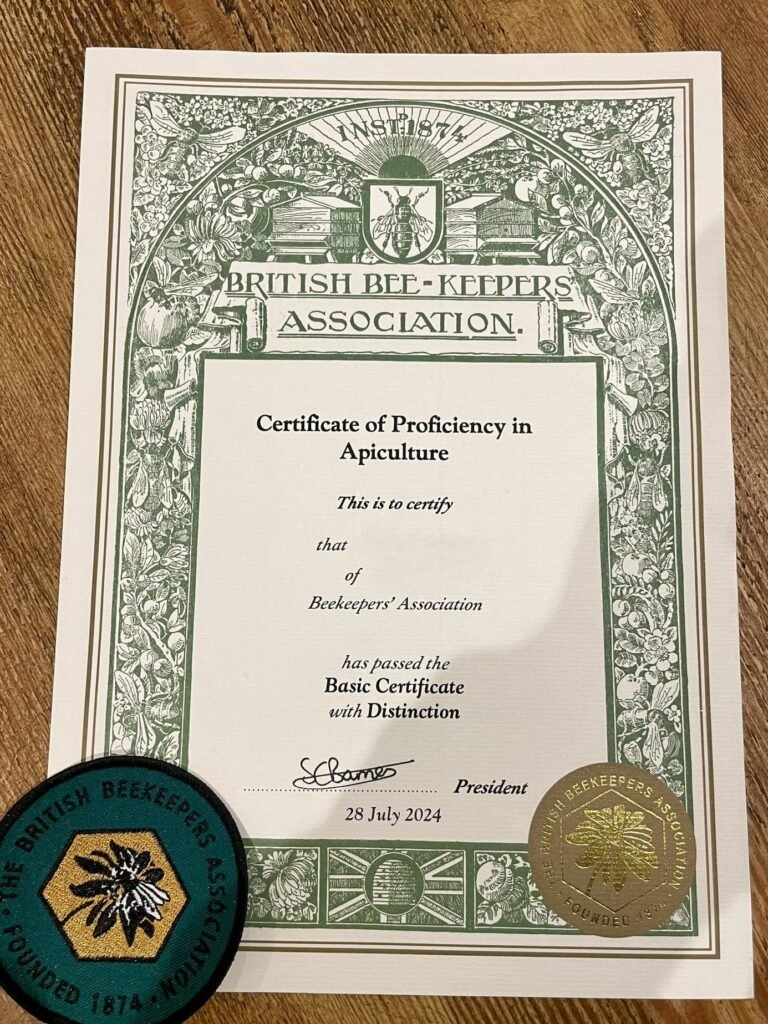
Finally, once you pass you do get a lovely badge you can sew onto your bee suit and a certificate showing the world you know what you’re talking about.
Can I take the Exam?
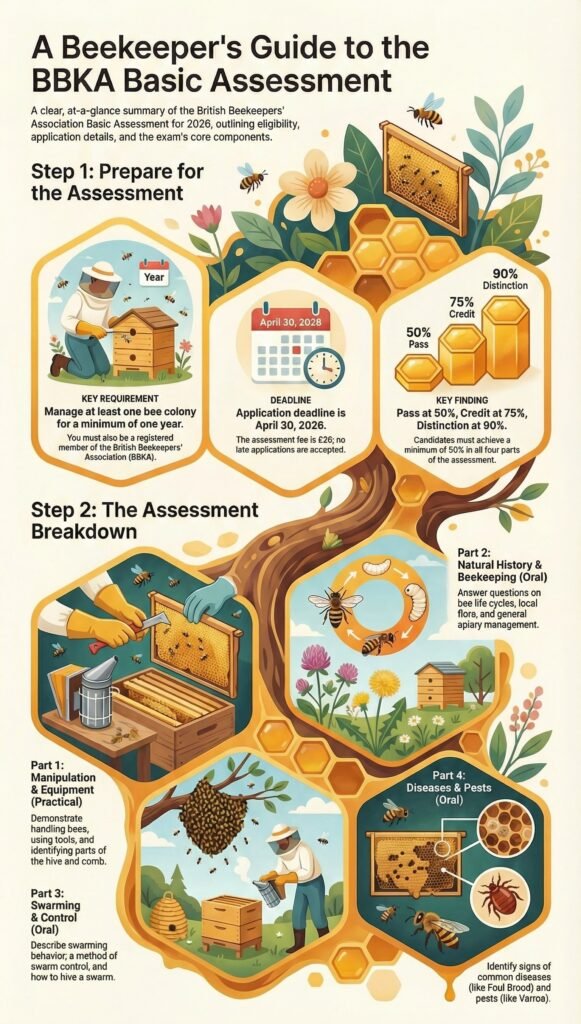
If you have at least one seasons beekeeping experience you may well be ready to take the Basic Assessment. The assessment is a mix of both practical assessment and theory and its necessary to be prepared for both. To pass you must achieve at least 50% in each of the 4 areas. Over 75% gets you a credit and over 90% a distinction.
One of the most important steps is to ensure you study the syllabus well and are familiar with what is required of you.
For your information the Syllabus and Reading list are attached here.
High Level Guide
The high-level guide below shows the topics which you will be assessed on. Do ensure you are familiar with a method of swarm control, know the signs of ailments in the hive and understand what the assessor will be looking for in your practical assessment.
Note. The fee for 2026 is £35, also note you will need to be a full member of your local beekeeping association.
BBKA Basic Assessment guide
The assessment is what is known as an ‘enabling assessment’. This means the assessors are not looking to “catch you out. Instead, they work to draw out what you know, offer suggestions on how your practices could be improved, and may even provide prompts to nudge you towards the correct answers
Just remember to explain what you are seeing and doing throughout the exam. Think of the examiner as a friend who knows nothing about bees and you are just giving them a rundown of what you see and what you are doing.
So, what exactly will the assessment check for. It’s really not that difficult. For more information watch the below 6 minute video for some practical details to help to be as prepared as possible..
BBKA Basic Study Guides
Being prepared is vital, but don’t feel overwhelmed. There are some great material to help you study. I would highly recommend the Haynes Beekeeping Manual and the BBKA healthy hive guide as your primary sources. The below 2 guides are also excellent resources to compliment your study.
Mid Bucks BBKA Study Guide
The below guide is from the Mid Bucks Beekeepers Association. The authors have done an amazing job in compiling this guide and we can only thank them for their hard work in making this available for all. Do read as part of your study guide, and if you found it useful do thank Mid Bucks for their works.
Note. This guide was downloaded at the end of 2025.
BBKA-Basic-Assessment-Study-Notes-revised-2024
Chesterfield & District – BBKA Study Group Slides
The below slides are from from the Chesterfield & District Bee Keepers Association web site. This guide is part of a presentation they created around the Basic Assessment.
The assessment day - Your guide
Now you have studied the syllabus, read up on the required parts and have practiced your practical skills. The big day is now approaching. What exactly will the day be like? Well take a listen to the below audio podcast (generated with the assistance of AI using information we provided).
It is 21 minutes long but has some great hints and tips as to what the assessor is looking for on the day. Grab yourself a nice warm drink, a pen and paper and sit down and have a listen. It really will prepare you.
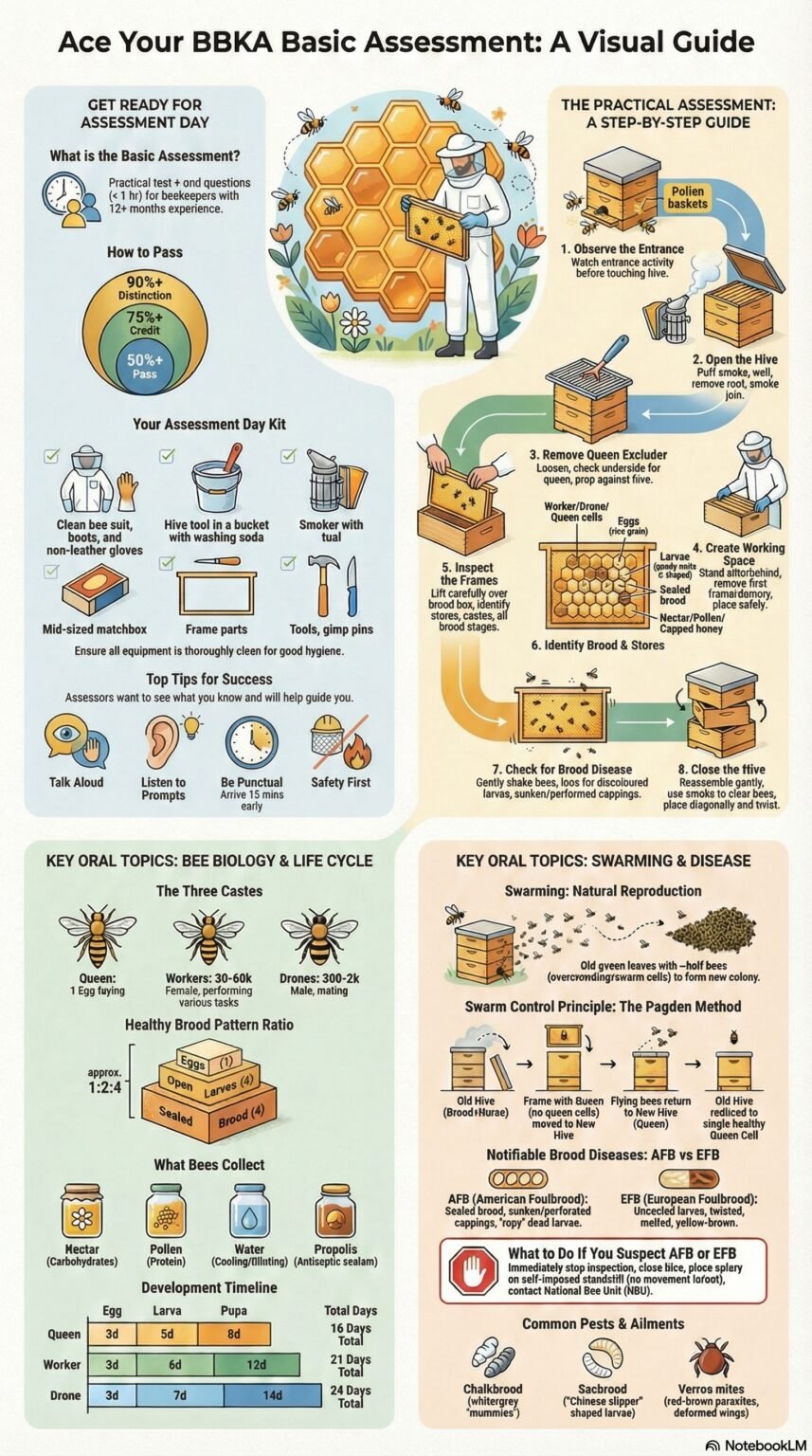
How to Ace your Assessment on the day
The below infographic summarised the items being assessed. Do make a good first impression and show the assessor you are prepared. Wear a nice clean bee suit, wash your boots, bring a clean hive tool in a bucket of washing soda, have a nice clean smoker with fuel and a lighter to hand, show you are ready. A good first impression makes a world of difference.
Sign up for the Assessment
The assessment currently (2026) costs £35. The application needs to be submitted between 1st Jan and 30th April. Assessments take place in the summer with the last assessment date being 31st August.
To apply contact your area examination officer (if part of a beekeeping association) or email members@bbka.org.uk if you are a direct member of the BBKA and wish to take the assessment directly.
If you have any special requirements or difficulties with taking assessments do list this down on the application. The assessor will take this into consideration and may give you the extra help required.
If you need to join a beekeeping association (highly recommended), the BBKA have compiled a list of all associations. This can be found below:
Where does the assessment take place?
The BBKA Basic Assessment will most likely take place at your local association or branch apiary. In some instances, it may be held at the apiary of an experienced beekeeping member. Under normal conditions, the assessment is not conducted in your own apiary unless there are special circumstances.
Because you may be one of several candidates scheduled for the day, you will be assigned a specific location, date, and time through your association’s exams secretary
You are advised to arrive roughly 15 minutes early to gather your kit and prepare, as being flustered by running late is not considered an ideal start
Finally
The exam may seem scary, but it should be fun to take and is not really very difficult. Just study the guides above and read the BBKA syllabus and reading guides.
Also, most beekeeping divisions will have an examination secretary or someone who can help. Do take advantage of this and let them know if you need any further guides. They may have a whole wealth of knowledge not listed in this guide.
If you found our page / guides useful do leave a comment below.